Last Updated 05/25/2026.
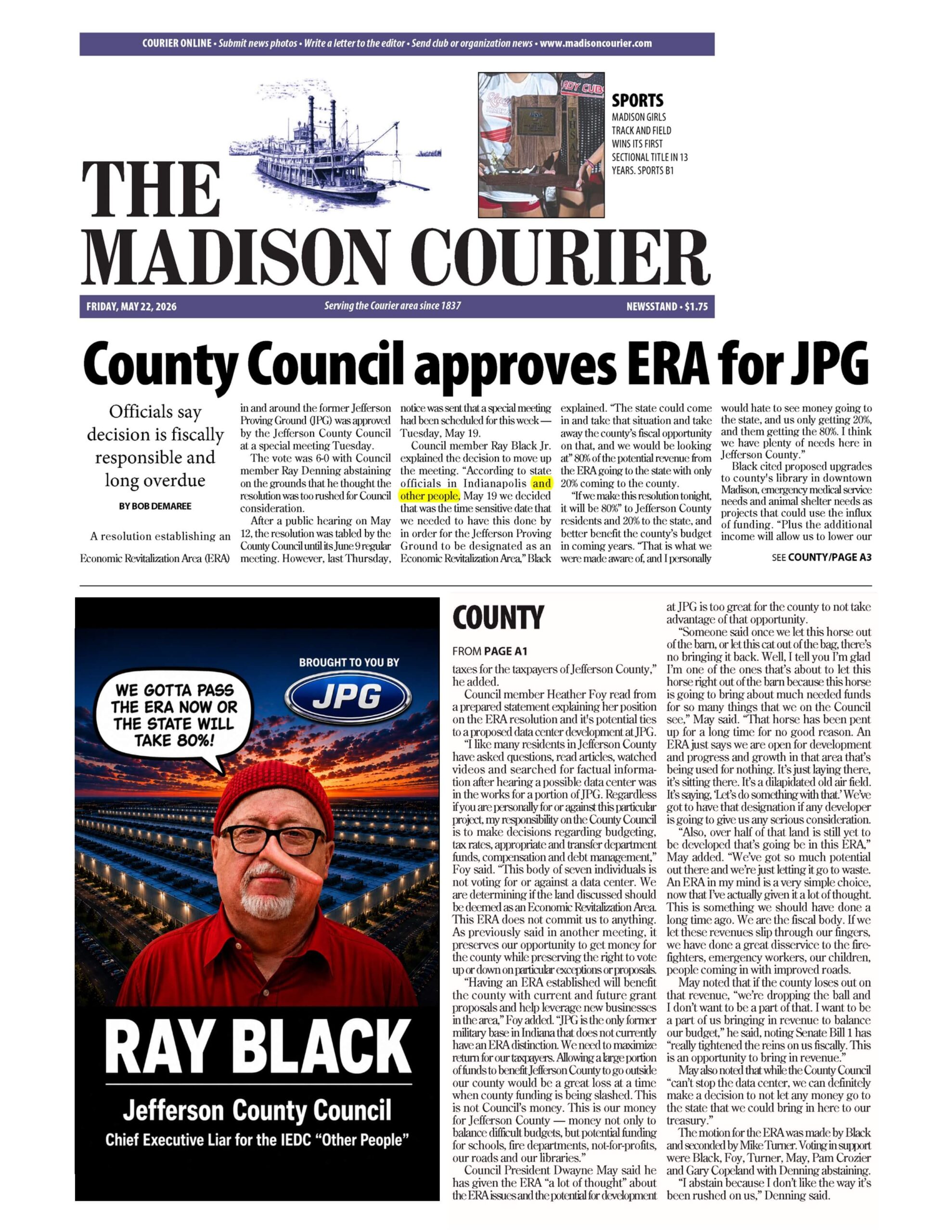
Click Article to Enlarge
This is a tale of two Rays, both serving their last terms on the county council. One responsive to his constituents, and the other, responsive to his “and others” IEDC handlers. This is how a captured council operates.
Where’s the transparency in this county council? We’re still searching for it. By scheduling a sham emergency special session only 2 days after this council voted to table the same for a month. Suddenly, there is a new “time senstive date”. Was it time sensitive because of the JPG data center BZA Appeal Hearing scheduled the following night?
At this special meeting, public comments were not allowed per the rules. So those hundreds of concerned citizens who showed up again to witness and respectfully remind the council they will be held accountable were also joined by those nice extra sheriff deputies in attendance.
The council read the resolution a final time, made a few prepared statements and presto, six council members voted lockstep to pass this ERA – all under false representations made by one of their own.
Due diligence is a foreign concept with this council. Councilman Ray Denning was the councils’ only saving grace. He abstained from voting because he said it felt rushed.
Thank you to the council for proving to the voting public that this was already a done deal. A deal that will benefit the connected, not the taxpayer.
Councilman Ray Black had an interesting choice of words. He stated that the state could come in and takeaway up to 80% of the county’s fiscal opportunity if the ERA was not passed. Is opportunity the same as revenue? The state has no such control of taking over regardless of ERA status.
Instead, the ERA is a creation of the IEDC and it’s RDA tenacles, private, non-government entities, as ruled in the courts. As such, councilman Ray Black had to such authority to be negotiating on the council’s behalf
The ERA is a tool to capture and control those revenues behind closed doors, without a public statement of benefit or oversight.
Whether the taxpayers actually see any reductions to their property taxes, or any of the other community projects benefit depends on the actual revenues generated and returned for the public. The taxpayers deserve a few seats at that table. Vote for change this November and bring in new seats.
The Following Was Posted 05/15/2026
Wow, has this been a whirlwind week. Thanks to an impassioned community that showed up in big numbers overflowing the Council Meeting building for the ERA Public Hearing on Tuesday, May 12th.
Thanks to so many powerful, articulate and impactful speakers, our council had plenty to consider. The council struggled to explain how the ERA works, sounding more like an IRS tax evasion hearing.
Several times the council tried to explain how the Data Center would not provide the full tax benefits unless the ERA was enacted. They further misrepresented that abatement like Payments in Lieu of Taxes (PILOT) were explicitly tied to the ERA.
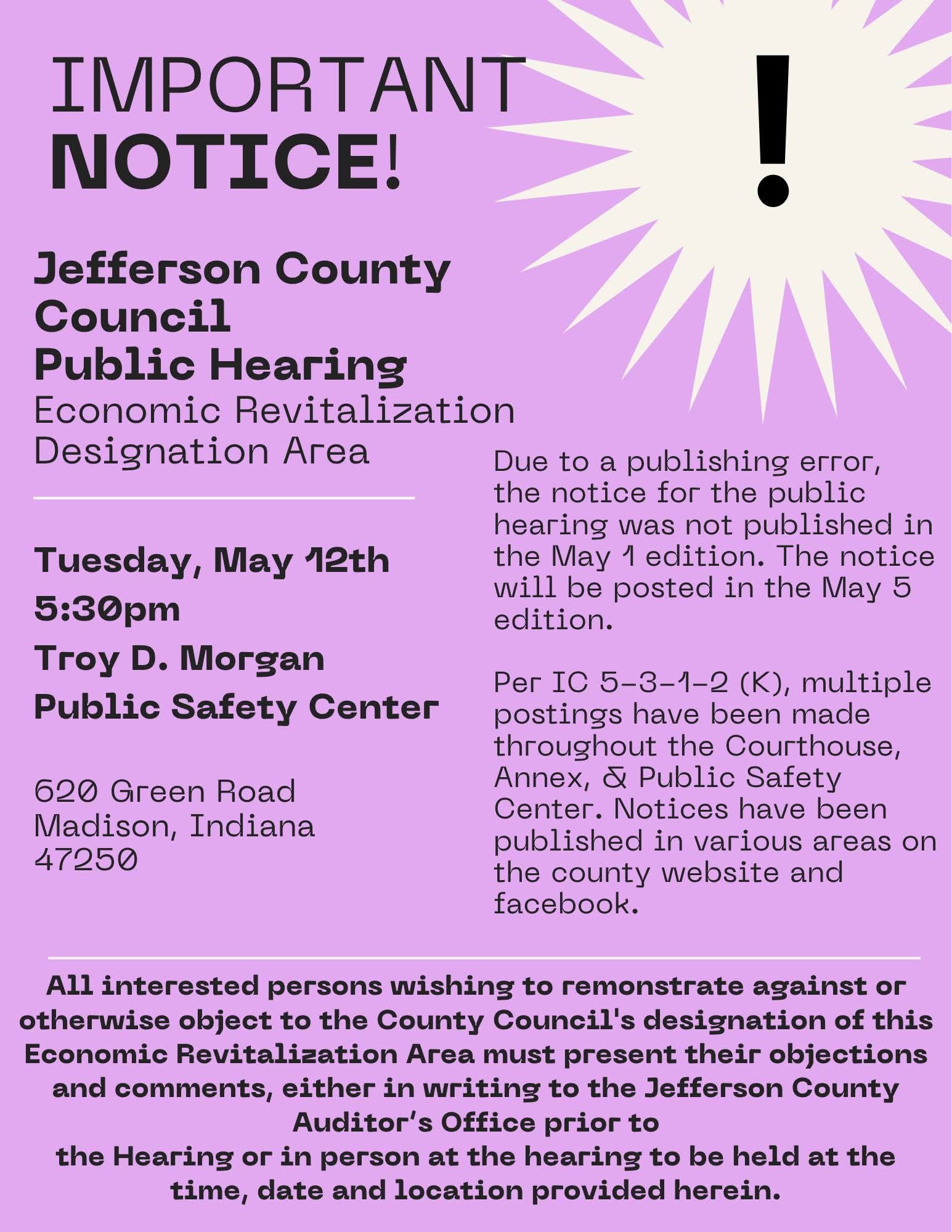
After a full 2.5 hours of testimony from 35 speakers and commissioner Bramer jumping in grace us with his expertise of glycol used in a closed loop session, the council voted to continue the hearing to the next regular meeting on June 9th.
Surprisingly, it was not a unanimous vote, with council members Crozier and Foy voting no and councilman Ray Black abstaining for a second time on the ERA. The people rejoiced and thought the council actually listened to them and acted in their best interest.
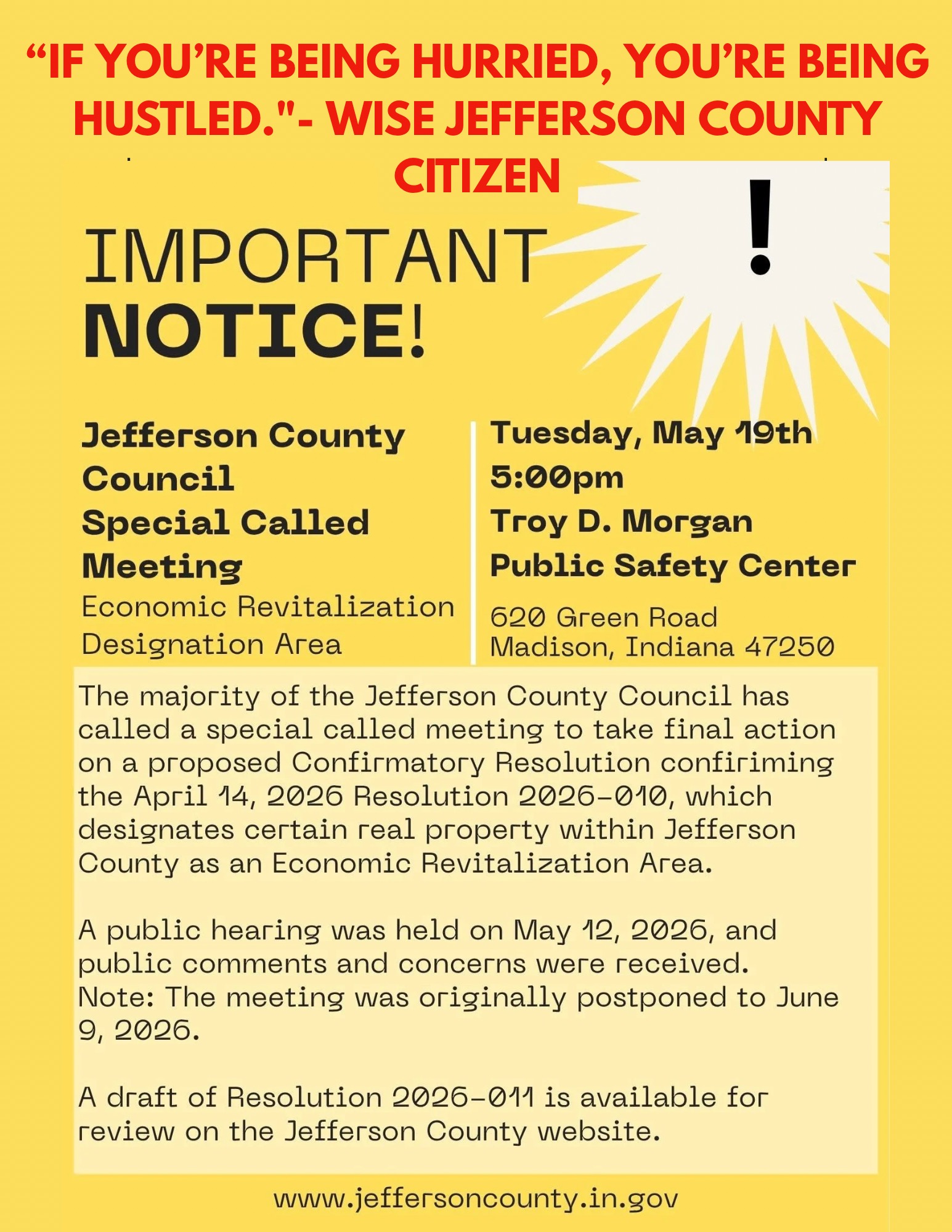
Well that was short lived. Two days later the council gave a last minute notice of a special hearing on the ERA, moving it up to next Tuesday, May 19th. The notice states The majority of the common council has called for as special meeting to take final action on a proposed Confirmatory Resolution 2026-10.
Wise Jefferson County Citizens have noted when did the council have enough time just two days after the marathon hearing? And how did the council get a majority statement without public notice to schedule this special meeting. What’s the big hurry?
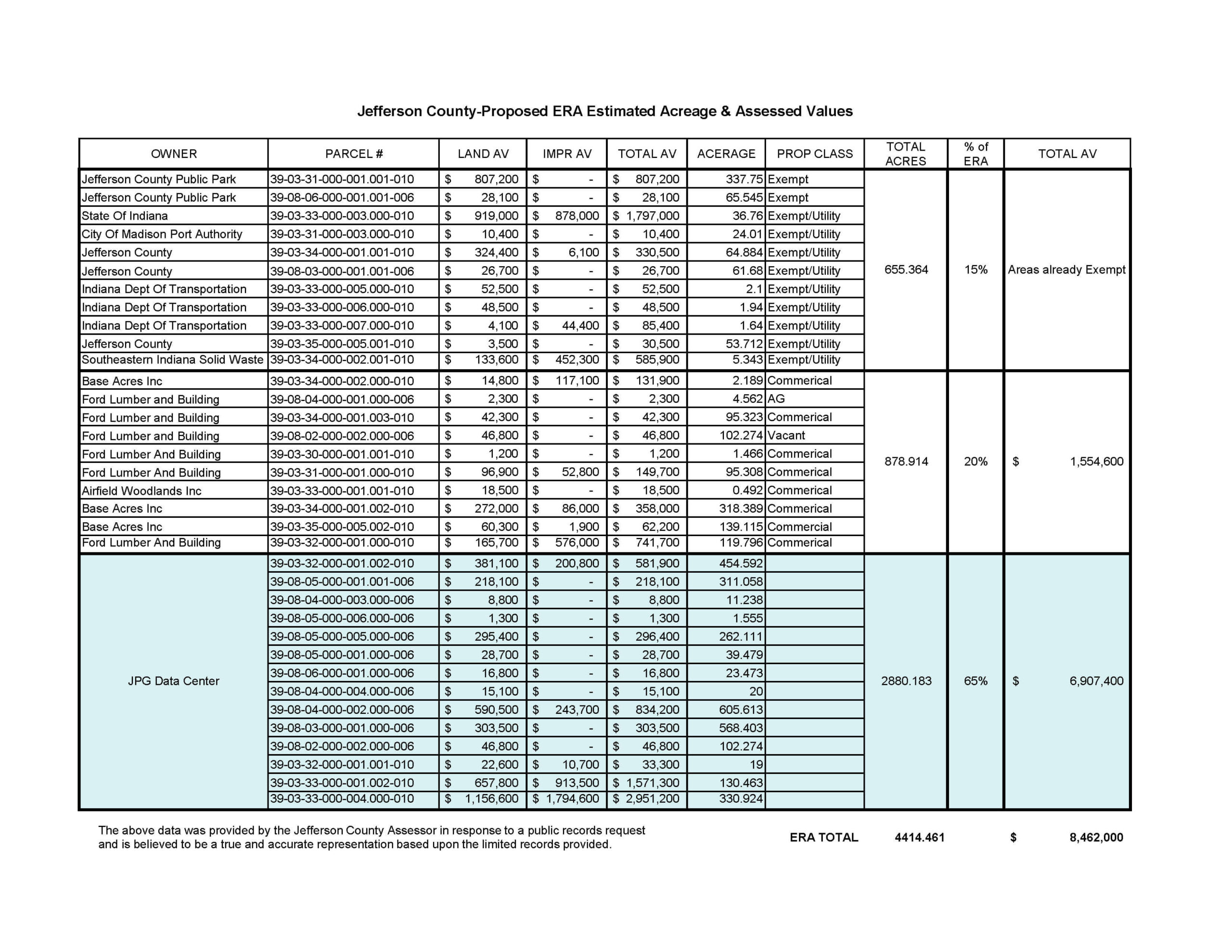
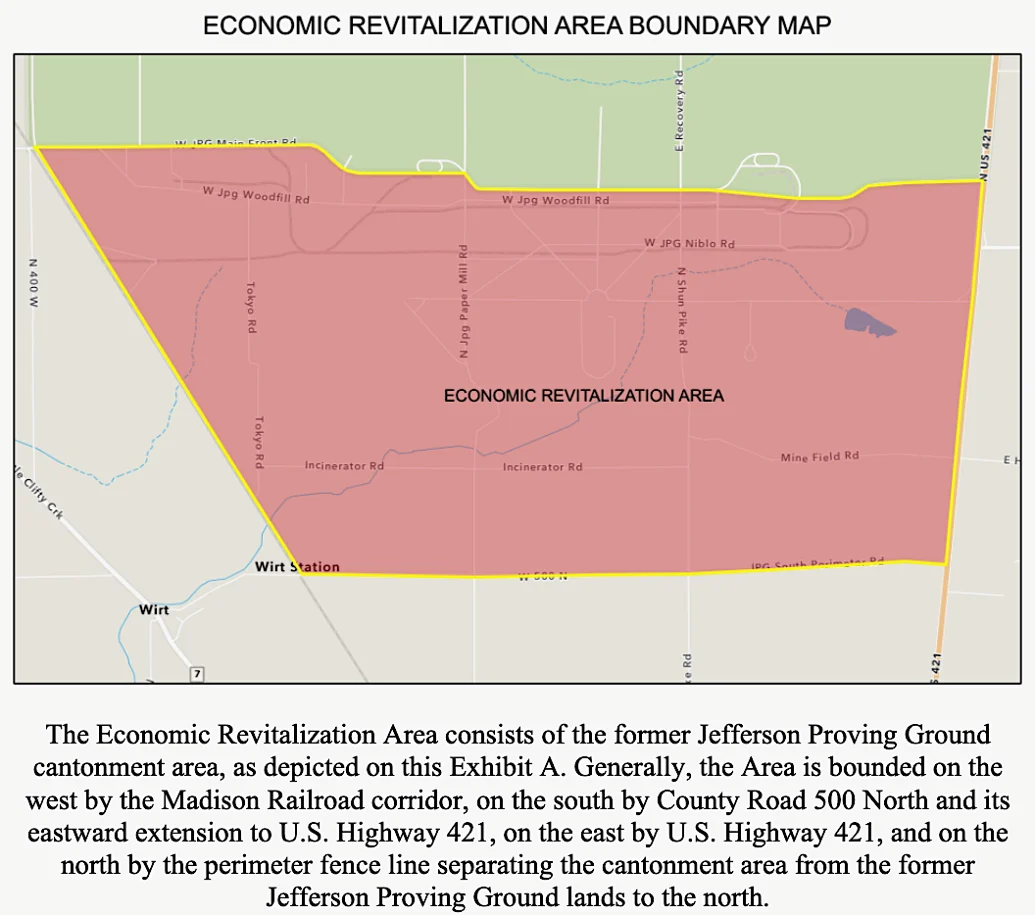
So, lets backtrack to earlier in the day of May 12th. Our wise Jefferson County Citizens were able to create the Proposed ERA by parcel and tax records finally provided by the Assessor.
The council was unable to tell the public the total ERA acres, parcel acres and counts, owners, assessed values of land, existing improvements.
The assessor confirmed numbers confirm a few things: There are 4,415 total acres in the proposed ERA
The data center project already issued a permit for 1,880 acres is actually 2,880 total acres. It comprises 65% of the total proposed ERA. It is controlled by the Ford Family.
The remaining privately held parcels comprise 20% of the proposed ERA. These parcels are entirely held by the Ford Family.
An addition 15% of the total ERA are tax exempt state and county entities.
So please square how a 7 million sq ft hyperscale data center is in need of revitalization, after the permit is already issued?
The Following Was Posted 04/19/2026
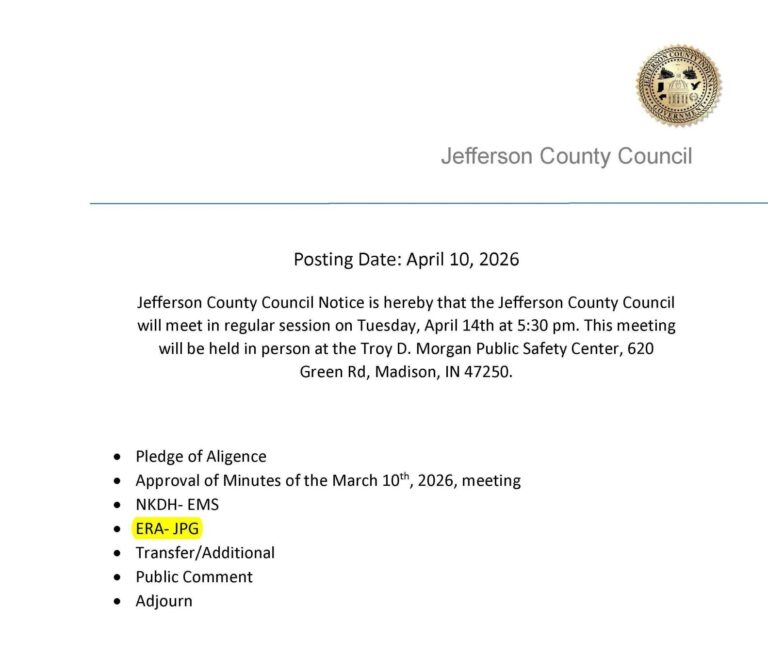
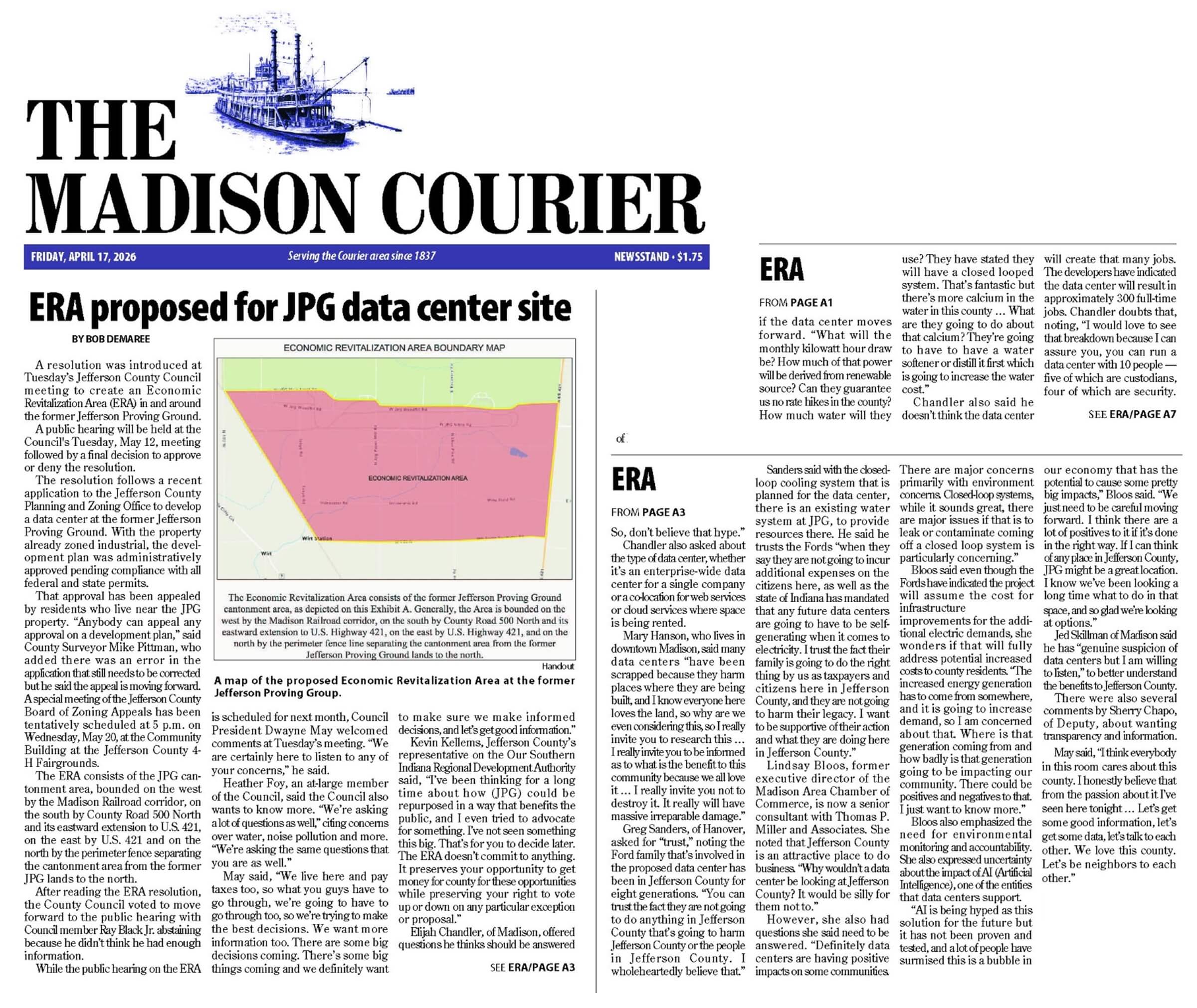
It is confirmed that ERA-JPG stands for an Economic Revitalization Area at JPG which includes the entire the planned 7.1 million sq.ft. data center planned by JPG Redevelopment LLC at the old Jefferson Proving Grounds.
The public had no prior opportunity to review any materials presented at the council, including a map of the proposed ERA-JPG prior to the meeting.
At the meeting on 4/14/2026, the Council President read the Resolution into the record. The council raised no questions or concerns, voting 6-1 to adopt it with Ray Black abstaining because he didn’t have sufficient time to review.
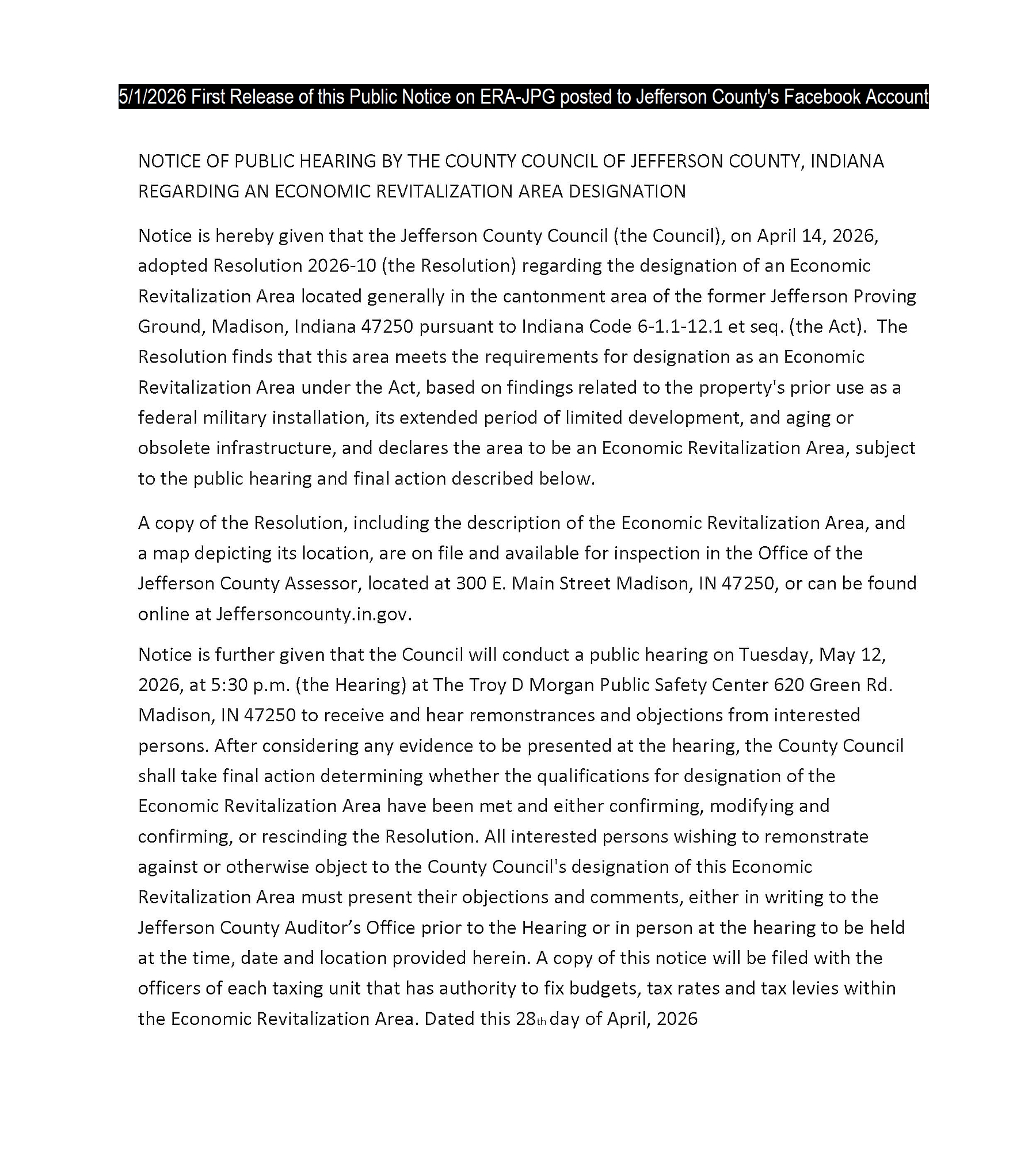
A public hearing will be held on the ERA-JPG at the next regularly scheduled council meeting 5:30 pm May 12th, 2026. Public comments will be heard before the council votes.
Please plan to attend and reach out to your council members to address any concerns while your voice matters.
Without proper information, there can be no misinformation.
Pointing fingers is pointless.
Continuing at the April 14th Council Meeting, the public requested changes to facilitate transparency and to bridge communication gaps between the council and their constituents.
To this end, thank you to Auditor, Heather Huff for offering to include the agenda items along with the Notice to allow the public the opportunity to review materials prior to the meeting. She also agreed to provide descriptions with any acronyms used in agenda items going forward.
Councilman Dwayne Mays graciously offered to personally address questions or concerns to avoid any future miscommunications.
What is an ERA?
Indiana has prepared this guide to assist the public and our council members with understanding how an ERA functions and the tax abatement process.
What are the Downsides to an ERA?
Economic Revitalization Areas (ERAs) in Indiana, which allow property tax abatement, can lead to significant downsides including reduced local government revenue, long-term tax base stagnation, and potential fiscal issues from tax shortfalls.
While intended to attract development to distressed areas, they are often used broadly, resulting in lost tax revenue that can increase the tax burden on other residents and businesses.
- Loss of Local Tax Revenue: Widespread use of tax abatements significantly reduces the revenue collected by local governments for services. When many projects receive tax breaks, the total revenue loss becomes substantial.
- Reduced Effectiveness & High Taxes: Research indicates that Indiana tax abatements do not always increase the overall tax base. In some cases, high usage of these abatements is associated with higher effective tax rates for those not receiving the deduction.
- Misuse of “Distressed” Designation: The original intent was to target distressed areas, but cities often define ERAs liberally—sometimes designating entire cities—to provide incentives, ignoring the spirit of the legislation.
- Fiscal Risk/Shortfalls: Tax abatements can result in budgetary shortfalls for local taxing units, and if not managed correctly, can lead to revenue losses.
- Long-Term Tax Jump: When the multi-year tax abatement period ends, companies face a sharp, sudden increase in property taxes.
- Pass-Through Costs: Tax abatements on developments can sometimes result in higher costs for tenants, rather than benefits for the community.
- Limited Impact: Tax abatements may only be effective in winning projects that would have occurred anyway (“but-for” issue), making them a potential waste of potential tax revenue.
The following was posted 4/13/2026
Fresh on the agenda before the BZA appeal is even scheduled is the JPG-ERA.
Does that stand for Economic Revitalization Area
or maybe its a new ERA of transparency?